The hardest part of marketing a technical product isn't making it sound impressive. It's saying what it's worth in a way that's both true and legible to the person who has to sign for it. That translation is the core of the job, and having built and deployed complex software before doing product marketing is what lets me do it without losing the thread.
The value ladder
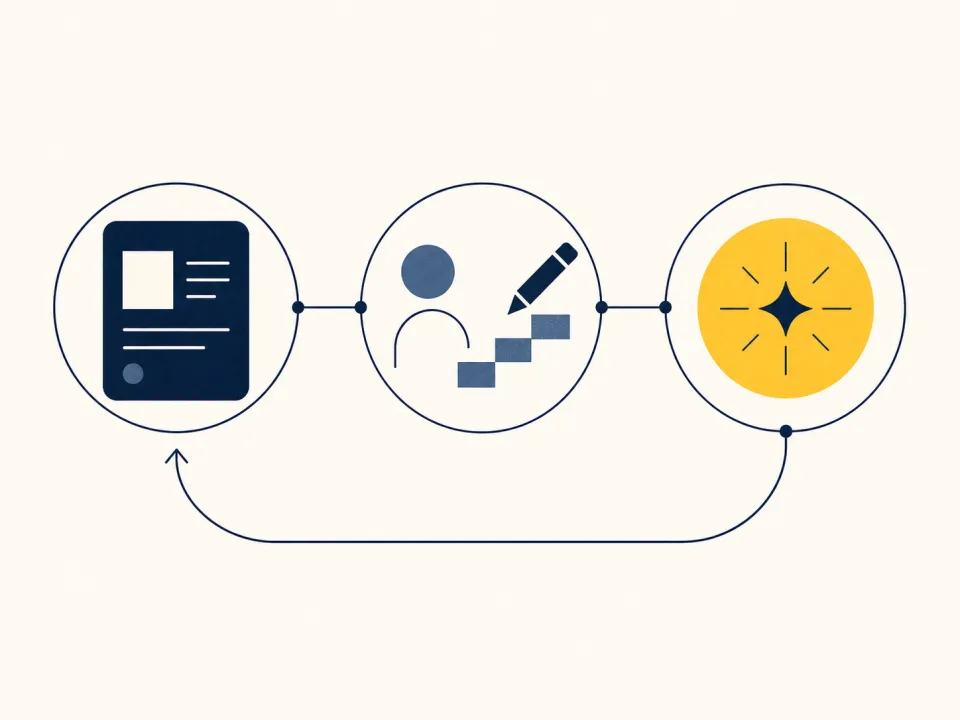
Value isn't one thing; it sits on a ladder. The four rungs are:
- Feature: a button, a model, a capability.
- Operational value: what that feature lets someone do.
- Business value: the result it produces.
- Strategic value: what it means for the company.
Most messaging stops one or two rungs from the bottom, at “here's what it does” or, on a good day, “here's the time it saves.” The work is to climb all the way up without breaking the chain, so that each rung still connects honestly to the one below it.
The value ladder
A concrete case. A product generates a report at the press of a button. Rung one: the button exists. Rung two: it pulls together information the user would otherwise assemble by hand. Rung three: that report used to take two hours every week, and now it takes twelve seconds, so the button is worth two hours a week. But there's a rung above that most people miss. That report is now a piece of the company's capitalization: it's produced the same way every time, it survives the person who used to make it, and onboarding a new employee doesn't cost you the capability. The same button, read at the top of the ladder, isn't a time-saver. It's institutional memory that doesn't leave when someone does.
Why technical depth matters
Climbing that ladder credibly is where a technical background stops being decoration. I can go down into the product, the digital twin, the physics, and the machine learning, understand what's actually happening, and come back up with a sentence a non-technical buyer can hold.
It matters for a second reason: our salespeople often sit across from deeply technical stakeholders, people who can tell within minutes whether the person selling to them actually understands the thing. Giving Sales the technical credibility to hold that room is a Product Marketing deliverable. It isn't Sales' problem to solve alone.
Where the claim stops
Not every product needs all four rungs, and reaching for the strategic frame when a buyer only wants to know whether the thing works is its own way of missing the point. The skill isn't always climbing to the top. It's knowing which rung this particular person, in this particular conversation, actually needs to stand on, and being able to reach any of them because you understand the whole ladder.